
The Worst Book I Ever Read
Review of Mircea Cărtărescu's "Solenoid"

"I swear to you that to think too much is a disease, a real, actual disease." — Dostoyevsky, Notes from the Underground
For the first time in our three years together, my girlfriend and I spent a week apart. We're inspiringly codependent: we read the same books at the same time in the same hoodies, go to the gym together to work the same muscle groups. Our time with different friends has us returning to discuss how their various problems echo the same underlying patterns. This one week with my partner in Rome, while I stayed behind with our dogs in Lisbon, sent me back to patterns I'd known before, in my brief moment of adult solitude during my first two years of university, twenty years ago. I have rarely been alone since.
I slipped easily into the reading habits of those university years. I let words take over, bought my first copy of the New York Review of Books, gathered fresh literary criticism, finished Batuman's The Idiot, and began the descent into Solenoid. Both novels offer autofiction through aspiring authors trapped in solipsism, unable to navigate the ordinary world or forge genuine connections. Solenoid's protagonist dwells at such remove from reality that reading him becomes an exercise in suppressing waves of nausea.
The book frightens me because it illuminates a tendency I recognize: the riptide of introspection. The diary whispers: stay here, dig deeper.
Trace each thought to its origin.
Where did you first encounter that phrase?
What images arise from those words?
Where does your body feel them? Feel them more.
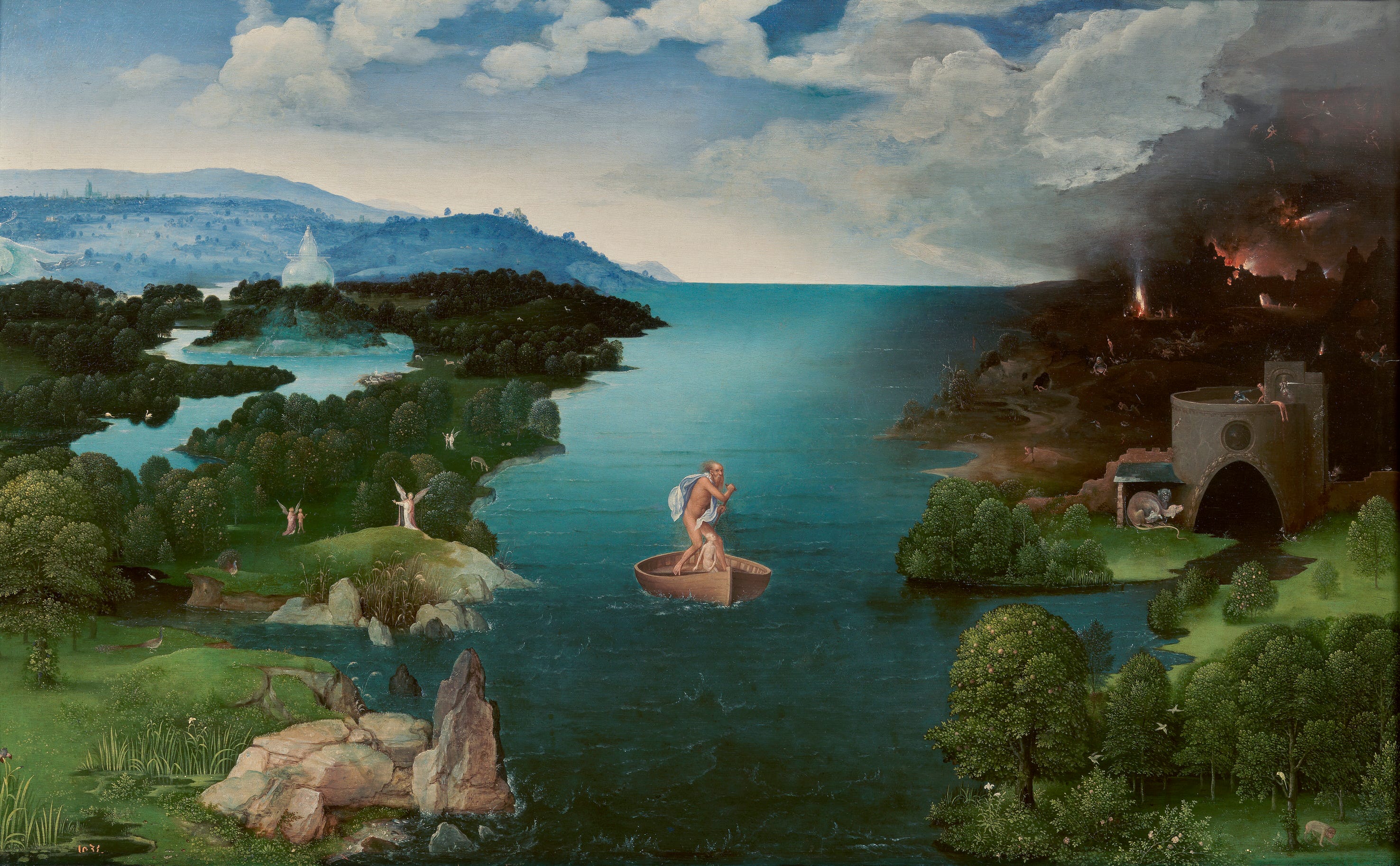
Therapists can serve as Charon, ferrying us across dark waters, but the journey can be undertaken alone, with your own pen as paddle.
One of my enduring frustrations with contemporary literary criticism is its preference for symptomatic readings—treating characters as symptoms of political or social conditions rather than as complex consciousnesses worth engaging on their own terms. I despised this approach in university, though I couldn't articulate why. Now, having embodied Nonviolent Communication and various empathy practices, I recognize symptomatic readings as fundamentally callous, stripping characters of their humanity to serve theoretical frameworks. My favorite reading of Hamlet suggests he might not be his father's son at all, but Claudius's—he resembles his contemplative, politically astute uncle far more than his warlike giant of a supposed father. Imagine the psychological complexity of that recognition. That's a reading that honors character over allegory.
I felt similar frustration with critical responses to Milkman. Rather than engaging with Middle Sister as a deeply traumatized woman navigating something resembling a war zone—walking through streets punctuated by car bombs and murders while performatively reading—critics reduced her to a symbol of the MeToo movement. When the militia leader investigates her because her family has a history with intelligence services, the entire dynamic gets flattened into simple sexual oppression. All politics, no personality. So boring.
Ironically, the Humanities have stripped reading of its humanity, as Postmodernism tends to do. Anderson, Moi, and Felski's Character: Three Inquiries in Literary Studies argues against this trend, and offers us frameworks for reconnecting with characters emotionally, beyond the dehumanizing constraints traditional literary criticism imposed. "I feel upset because I am watching a torture scene," Moi writes, and yes—exactly. I'm reading Solenoid and I'm upset because I'm witnessing self-torture masquerading as metaphysical inquiry. Go to sleep! Exercise! Have a normal conversation! Your hallucinations might disappear if you treated your body with basic respect.
Cărtărescu's narrator yearns desperately for transcendence, for passage to some realm where existence might be renegotiated. You could perform a symptomatic reading, decode the novel as merely responding to Romanian communism, “only as situated within ideological and sociohistorical contexts” (Anderson, Felski, Moi) but such reductionism dissolves what makes the book genuinely disturbing. His condition transcends historical circumstance. Extended diary writing—examining reality until everything becomes equally illusory—is treacherous territory. It operates like a drug, severing connections to co-created reality with each heavier dose.
The protagonist reads eight hours daily in bed, metabolizing entire libraries. His first public offering is a behemoth poem—thirty pages he reads in full at a poetry gathering, for an hour straight. The audience's rejection is both obvious and inevitable. Of course they hate it. That’s not the place to read for an hour, you dolt! Be considerate of your auditors. Where was his awareness of others, his sense of proportion? I'm reminded of Karmazinov's egotism in Dostoyevsky's Demons, reading his final work to a bored audience, while he was profoundly proud, expecting adoration, and surprised by its absence. Solenoid's protagonist, wounded by this single poorly received reading, retreats entirely from public writing, convinced that truth resides only in the private excavations of diary-keeping, in idiosyncratic patterns that might reveal escape routes from this dimension. Ugh. As if writers haven’t amassed piles of rejection letters. Rejection letters feed the fires of the writer’s career.
I think of my own moment of similar cowardice. Playing provincial basketball, representing my city across Ontario, I dominated a major tournament final with twenty points. My team was down two with seconds remaining. Coach drew a play for Jonathan to hit a three and win. We executed perfectly—everyone in position, all the right passes made, Jonathan wide open for the shot. But he flinched, refused to shoot, passed to me instead. This wasn't the plan. I improvised—beat my defender, spun through traffic, head-faked another player into the air, pivoted underneath, and banked the shot off glass. The ball kissed the rim as the buzzer sounded, circled once, twice, then spun out. We lost. I never played organized ball again. The narrator's retreat reminds me of my own, and I resent us both for it.

Solenoid presents a profoundly unhealthy consciousness: minimal social skills wedded to maximal self-belief, four hours of sleep sacrificed nightly to document hallucinations and terrors. From this crucible of isolation and self-abuse, the narrator attempts to decode reality's hidden mathematics, its Konami Code. It's vulnerable narcissism elaborated into soteriology—the belief that relentless picking at scabs might break through to the universe's code, without acknowledging that the instrument of observation, when abused, distorts everything it perceives. The mind is the byproduct of the body. He doesn't see the world as it is, but as he has become. The passages about higher dimensions read like post-ayahuasca revelations, carrying the certainty of exclusive access to cosmic truth, attempting to frame madness as logical from within its own architecture.
I cannot more loudly proclaim how utterly destructive this approach is, and I feel I almost need to frame this as the toxic masculinity of the incel manosphere to sell my point. Perhaps readers aren't as disturbed as I am because I have spent years resisting the pull of the abyss that Solenoid's narrator surrenders to. Solenoid sings the siren song of narcissistic introspection—not for the love of beauty, but for the love of the universe inside yourself. I know that, if I were to live without a loving partner and with endless means, I'd line my room with cork and examine every aspect of myself I could remember. I could reframe this a Vipassana retreat and my religious rights would be honored; others could view it as schizophrenia, and rightfully so. In either case, the practice is profoundly isolating, antisocial, antinatalist, solipsistic, and streams of other negatively connotative words.
A few days into my partner's absence, many words deep into both Solenoid and my own introspective writing, I felt increasingly ill at ease. I was unhappy. My eyes narrowed. I made less eye contact, less small talk. My gaze drifted groundward, my lips moved with no one to hear but myself. I remember my university days, twenty years ago, as among the darkest of my life. I went all in on reading and writing. I stopped exercising, barely socialized. I wanted to give myself to a career in words. As I descended into my own misery, I became aware of the misery of so many canonical writers. Only through finding love did I pull myself out and begin learning how to interface with the world again.
Stephen Marche was a Teaching Assistant in one of my classes then. Since those days, he's become a multiply published author. In my week alone, remembering our time together at university, I looked him up and found his book On Writing and Failure, which meticulously catalogs the miseries that attend the writing life:
A study of all poets reviewed in the New York Times Book Review between 1960 and 1990 revealed that 18% had committed suicide. Touched with Fire, Kay Redfield Jamison's 1993 study of writing and mental illness, compiled anecdotes on the mental conditions of hundreds of writers between 1705 and 1805 (so before the advent of the Romantic connection between madness and genius) and found they were about five times more likely to kill themselves than the general population and thirty times more likely to be symptomatic of general mood disorders. Researchers attempted to analyze the mental health of contemporary writers by testing participants from the University of Iowa Writers' Workshop. They found 80 percent of the sample "met formal diagnostic criteria for a major mood disorder."
In Hernan Diaz's Trust, the most haunting section follows a father who descends through reading and writing into madness, institutionalization, and disappearance. Batuman's The Idiot presents a gentler variation: a writer incapable of translating embodied experience into communication, drifting through relationships at everyone's mercy but her own. Each book seems to warn against the very activity that brings them into being.
All these characters noticeably neglect their health. What if we wrote toward harmony rather than hallucination—beautiful communication instead of disconnection, healthy living rather than self-destruction? Imagine elegant words from strong bodies, where rigorous exercise and clean eating support rather than substitute for creation, where we perfect the manufacturing process rather than obsessing over distribution. Build the temple. Surrender to stricter bedtimes, precise nutrition. Become the Bryan Johnson of aesthetic production. He optimizes health through biohacking; we could optimize the literary life through deliberate practice. Show that self-care unlocks different dimensions entirely—that heaven exists not temporally after life but experientially after we transcend our own abjection. Love, bliss, connection become possible. Openness and honesty flourish. Friendship, community, moral ambition emerge.
I'm noticing the limits of autofiction. Is it only interesting if you're miserable? Happy people are all alike; every unhappy person is unhappy in their own way. Writers desperate for a living heighten their misery like self-flagellants petitioning God for admission to the club. This asceticism is grotesque, but misery sells. We still rubberneck at car accidents, more so if they’re on fire. There’s something beautiful about a house on fire at night, as mentioned in Demons. We gawk at misery. Jackass the TV show rode this into fortune. Kafka understood the Kafkaesque. The Hunger Artist will soon play the Hunger Games only with himself.

The beautiful trade their faces and bodies for social credits, the ugly sell their hands, and the maimed sell their suffering to the welfare state. Under peaceful conditions the warlike man attacks himself. Solenoid treats suffering as a means to an end rather than an end in itself, but there is no end to suffering. It doesn't liberate you. It immiserates you and those around you.
I feel upset reading this book because I am watching a man torture himself. It feels as gross as Google's Veo3 video where the prompts beg for better prompting so they won't suffer. Recreating suffering is unethical, whether in humans, animals, texts, or prompts. This book deserves as many awards as school shooters deserve peace prizes. School shooters aren't named and honored with the attention TV coverage offers, and it seems our most prestigious awards go to those who recreate suffering, as literary judges are intoxicated by emotional torture porn. Hitler failed as an artist and brought his talents elsewhere.
As a writer, I feel morally opposed to the glorification of misery. Whatever benefit Booker Prize judges and other readers believe this book offers, I refuse to accept. The ends don't justify the means, and there is no salvation to be found in exploring suffering.
My partner has returned from Rome. My doses of oxytocin and serotonin are restored, my body regulated again. I no longer feel as ill as I did while reading Solenoid. The two of us just finished reading Dostoyevsky's Demons, the first book we read together at the same time. What a wonderful experience that was. I'll begin writing my thoughts about that book tomorrow, and look forward to sharing them with you soon.